
With the growing demand for beauty enhancements, hair extensions have become an indispensable accessory for millions of girls worldwide. When it comes to hair extensions, many people immediately think of keratin hair extensions because of their natural appearance and effectiveness.


1. What is a Keratin Hair Extension?
Keratin bond hair extensions are attached to your natural hair using a small keratin protein bond that mimics the natural protein structure of hair. These bonds can be either hot or cold, creating a secure and discreet attachment. This type of hair extension helps minimize stress on your natural hair, allowing it to grow normally. Additionally, keratin can be styled just like your natural hair.
The extensions are applied strand by strand using a heating tool or ultras onic waves to bond the keratin to your hair. This process is done row by row, ensuring good coverage so the extensions are not visible. The procedure can take anywhere from one to four hours, depending on the number of extensions needed. After application, your stylist will dry and style your hair, ensuring the extensions are perfectly layered and blended.
2. What are the Differences Between the Three Types of Keratin Extensions: U-tip, I-tip, and Flat-tip?
I-tip Hair Extension: This type has a distinctive “I” shape at the end of the hair strand. The extensions are attached using tiny micro rings and secured with pliers. Using this type of extension can significantly increase the volume of your hair. However, if the extensions are placed too far apart, your hair may not look as natural.
U-tip Hair Extension: Unlike I-tips, U-tip extensions require heat to be attached to your natural hair. These extensions have a U-shaped keratin tip at the end of the strand. The keratin tip is pre-bonded with a heat-activated adhesive. The extension is applied by melting the keratin tip with a heating tool and then attaching it to the natural hair. The heated keratin forms a strong and long-lasting connection.
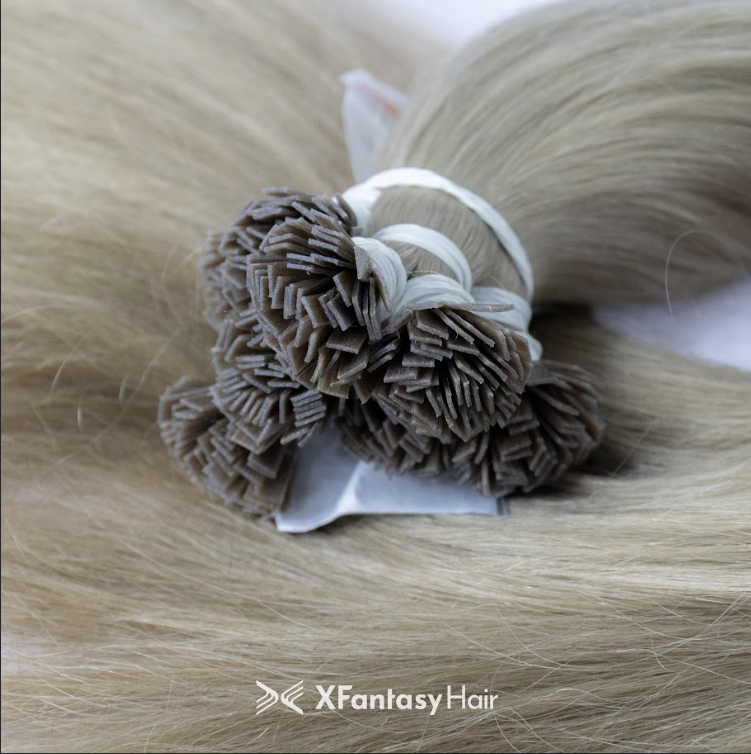
Flat-tip Hair Extension: Similar to U-tips, Flat-tip extensions are attached to the hair by melting the keratin adhesive. The main difference here is that the tip of the Flat-tip extension is flat.
3. Choosing the Right Type of Keratin Hair Extension for Your Hair
The differences in the tip shape mean that each type of extension requires its own method and technique. While I-tip and U-tip extensions are often used for ponytail hairstyles, Flat-tip extensions are more commonly used for curly or loose hairstyles.
For individuals with curly or coarse hair, using I-tip extensions can result in tangling, knotting, and challenges during removal. Therefore, I-tip extensions may not be the most suitable choice for individuals with naturally “elastic” hair textures.
Both U-tip and Flat-tip extensions require the use of a heating tool to melt the keratin for application. Although these tools only use a small fraction of the heat produced by conventional curling and straightening irons and only contact the hair for a brief time, those with delicate or easily damaged hair might want to avoid heat exposure.
4. Conclusion
Each type of keratin hair extension has its unique structure and method, so it’s important to carefully consider your natural hair type, intended use, and the benefits of each extension type. If you’re still unsure, consult a professional to make the best choice.
We hope this article from XfantasyHair can assist you in your beauty journey.